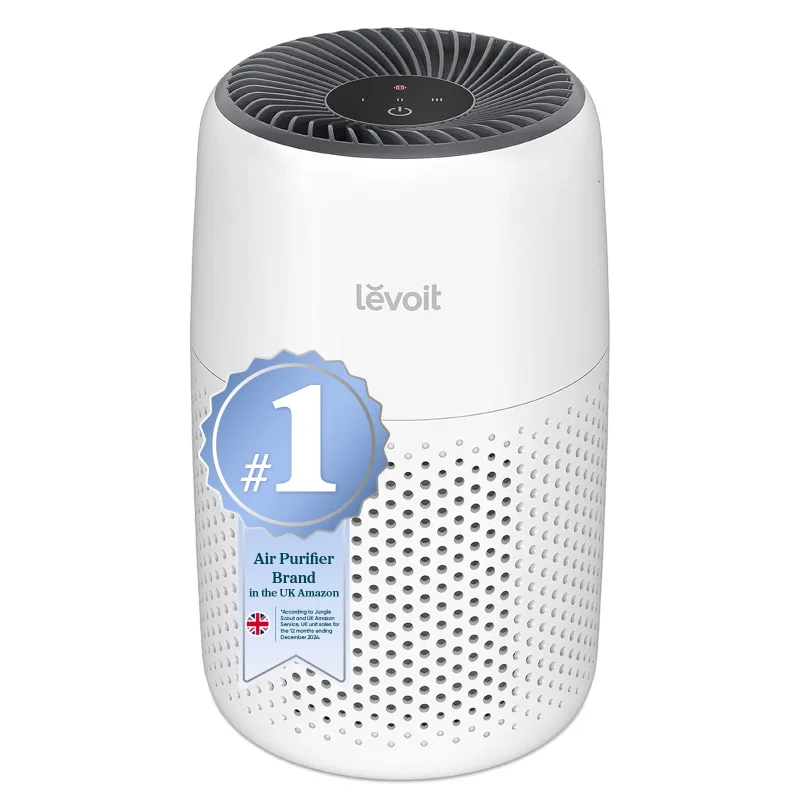
Levoit Core Mini
A small, cheap HEPA purifier for a desk, nursery or box room.
Check Price on Amazon Read the full reviewOur verdict: The best air purifier in 2026 is the Levoit Core Mini. It tops our ranking with 9.0 out of 10.
Just one pick here: nothing cheaper than the No. 1 is a better buy and no dearer model makes the top half.
A small, cheap HEPA purifier for a desk, nursery or box room.
Check Price on Amazon Read the full reviewWe compared 16 air purifiers sold in the UK, then ranked ten of them by how happy owners are. These ten cover compact bedroom units, mid-size smart towers, large-room machines and two Dyson models with formaldehyde or heater extras, across budget to premium prices. Every product links to its full review below.
Levoit Core MiniBest Choice
9.0 out of 10
Check Price
 Winix 5500-2
8.9 out of 10
Check Price
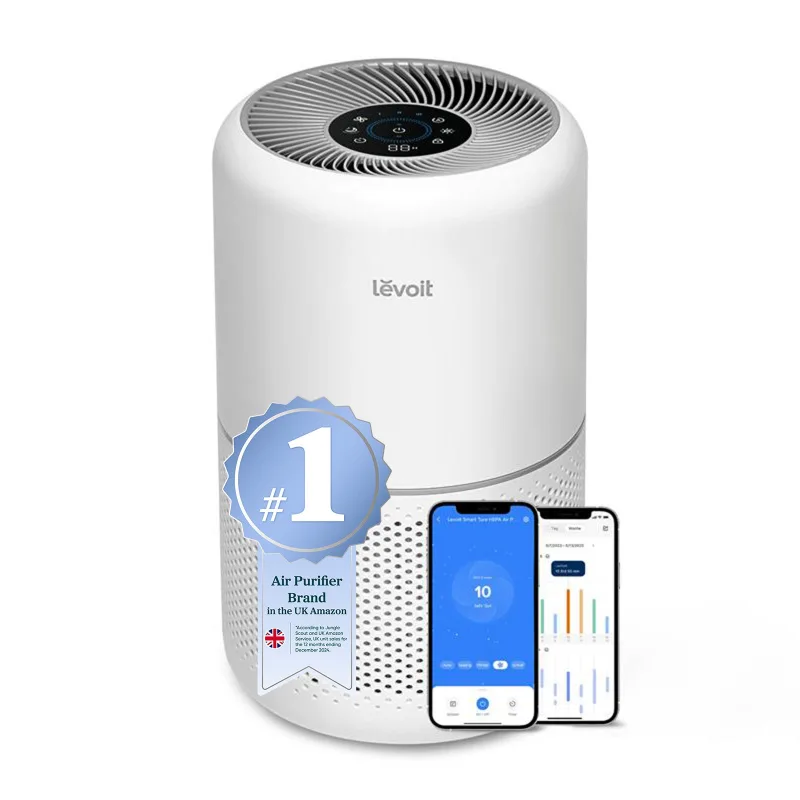 Levoit Core 300S
8.5 out of 10
Check Price
 Coway Airmega Mighty AP-1512HH
8.5 out of 10
Check Price
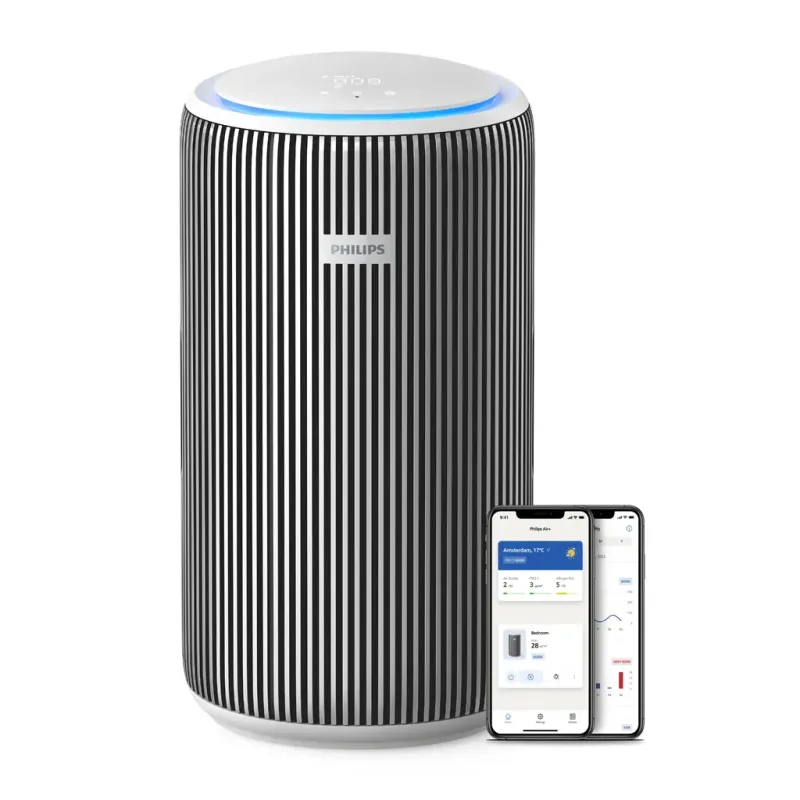 Philips PureProtect 3200 Series AC3220/10
8.2 out of 10
Check Price
 Blueair Blue Max 3250i
8.0 out of 10
Check Price
 Dyson Big+Quiet Formaldehyde
7.8 out of 10
Check Price
 Dyson Purifier Hot+Cool HP1
7.8 out of 10
Check Price
 Blueair Blue Signature
7.7 out of 10
Check Price
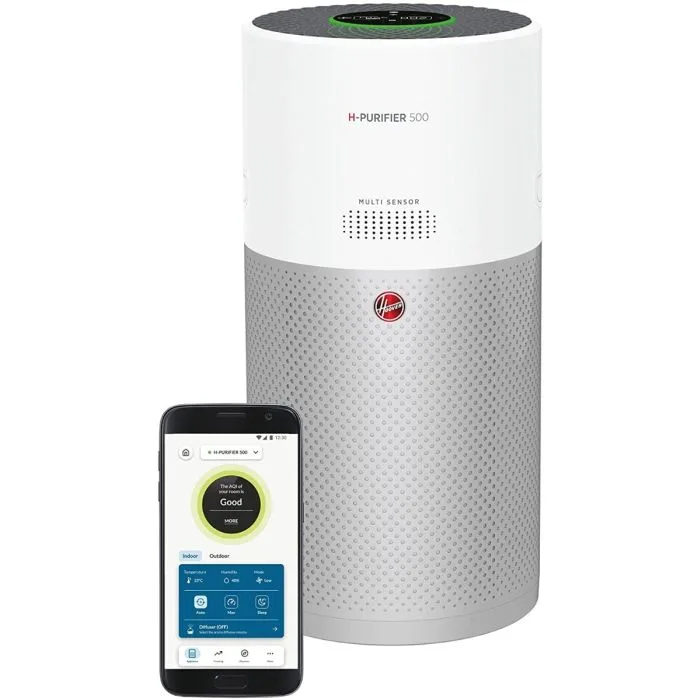 Hoover H-Purifier 500
7.7 out of 10
Check Price
The Levoit Core Mini (9.0) beats the Winix 5500-2 (8.9): owners are about as happy with both, and it is the newer design.
A small, cheap HEPA purifier for a desk, nursery or box room. It is a budget way to start, not a unit for a living room.
Each bar shows its place in this guide, so a full bar is 1st of 10. How happy owners are counts for most of the score.
A low-cost HEPA and carbon purifier with a strong airflow for the money. It is the practical choice for pollen, dust and smoke.
Each bar shows its place in this guide, so a full bar is 1st of 10. How happy owners are counts for most of the score.
The all-rounder for most bedrooms and living rooms. Owners rate its quiet running and app control, and the three-stage filter is easy to buy replacements for.
Each bar shows its place in this guide, so a full bar is 1st of 10. How happy owners are counts for most of the score.
A long-running, well-regarded True HEPA tower. It suits allergy sufferers and pet owners and has auto and eco modes.
Each bar shows its place in this guide, so a full bar is 1st of 10. How happy owners are counts for most of the score.
A high-airflow purifier for large rooms. HEPA NanoProtect and an active carbon layer sit behind a CADR of 520 m³/h.
Each bar shows its place in this guide, so a full bar is 1st of 10. How happy owners are counts for most of the score.
A quiet, plain-looking tower for bedrooms and living rooms up to around 48 square metres. The HEPASilent filter keeps noise down, and the Wi-Fi app adds auto control.
Each bar shows its place in this guide, so a full bar is 1st of 10. How happy owners are counts for most of the score.
The flagship for big open-plan rooms. It pairs a sealed HEPA H13 and carbon system with a filter that breaks down formaldehyde, and it is the pick the review sites return to most.
Each bar shows its place in this guide, so a full bar is 1st of 10. How happy owners are counts for most of the score.
A purifier, fan and heater in one tower. The purifying is the same H13 HEPA and carbon job as a plain unit, with winter heat and summer cooling as extras.
Each bar shows its place in this guide, so a full bar is 1st of 10. How happy owners are counts for most of the score.
Blueair's furniture-style flagship for large living spaces. It filters with HEPASilent plus a carbon stage and is designed to sit in a room as a piece of furniture rather than hide in a corner.
Each bar shows its place in this guide, so a full bar is 1st of 10. How happy owners are counts for most of the score.
A connected purifier with an aroma diffuser. It pairs a HEPA 13 filter with activated carbon, and PM2.5, PM10 and VOC sensors set the fan speed in auto mode.
Each bar shows its place in this guide, so a full bar is 1st of 10. How happy owners are counts for most of the score.
Match the CADR (clean air delivery rate, in m³/h) to the room. A common rule is to pick a CADR of at least five times the room volume in cubic metres, so a 4m by 4m room with a 2.4m ceiling (about 38 m³) wants roughly 190 m³/h or more. Brands quote 'recommended room size' in square metres, often at one air change per hour, so treat those figures generously. Bedrooms are fine with a 100 to 250 m³/h unit. Open-plan spaces need 350 m³/h or higher.
They remove airborne pollen, dust mite debris and pet dander that has already floated into the room, which can help symptoms indoors. They cannot stop pollen coming in on clothes and hair, and they do not remove allergens already settled on bedding and carpets. For hay fever, run one in the bedroom with the windows shut during high pollen days. They do not cure asthma or mould: mould needs the damp fixed at source.
True HEPA (H13 or H14) filters physically trap at least 99.95% of particles at their most penetrating size. 'HEPA-type' or 'HEPA-style' filters make no such guarantee. Ionisers charge particles so they stick to surfaces, and some produce small amounts of ozone, a lung irritant, so ozone-producing models are best avoided. Choose a mechanical HEPA filter, and switch the ioniser off if one is built in, as on the Winix 5500-2.
Most brands recommend replacing the combined filter every six to twelve months, depending on use and local air quality. Budget around £20 to £60 a year for compact models such as the Levoit Core range, and more for large towers like Dyson. Activated carbon filters saturate faster in smoky or cooking-heavy homes. Third-party filters are cheaper but do not always match the original's performance.
Most are, on the lowest setting. Look for a night or sleep mode, quoted at 20 to 30 dB, which is close to a quiet whisper. Noise rises sharply at high speeds, with many models near 50 to 60 dB. Turn off display lights where you can, as the brightness often bothers sleepers more than the sound.
At around 26p per kWh (the Ofgem cap, October to December 2026), a 22W purifier at full speed for 24 hours uses about 0.53 kWh, roughly 14p a day. On low or night mode the draw is often under 10W, so closer to 6p a day. Large units such as the Philips 3200 draw up to 36W. A Dyson Hot+Cool in heater mode costs far more, so use it for heating only when needed.
Every score here comes from our ranking model; no editor sets the order. Too few review sites cover air purifiers for their verdicts to lead, so this ranking is led by owners. It ranks products by how happy owners are, holding back any product few owners have rated until more agree. How many rated it and how new it is only settle close calls, and value for money earns its own badge rather than a higher place. We compared 16 models for this guide before settling on these ten.
Brands can't pay to be included or to move up. We last checked these picks in October 2026.
How we rank, in fullA small, cheap HEPA purifier for a desk, nursery or box room. 9.0 out of 10.