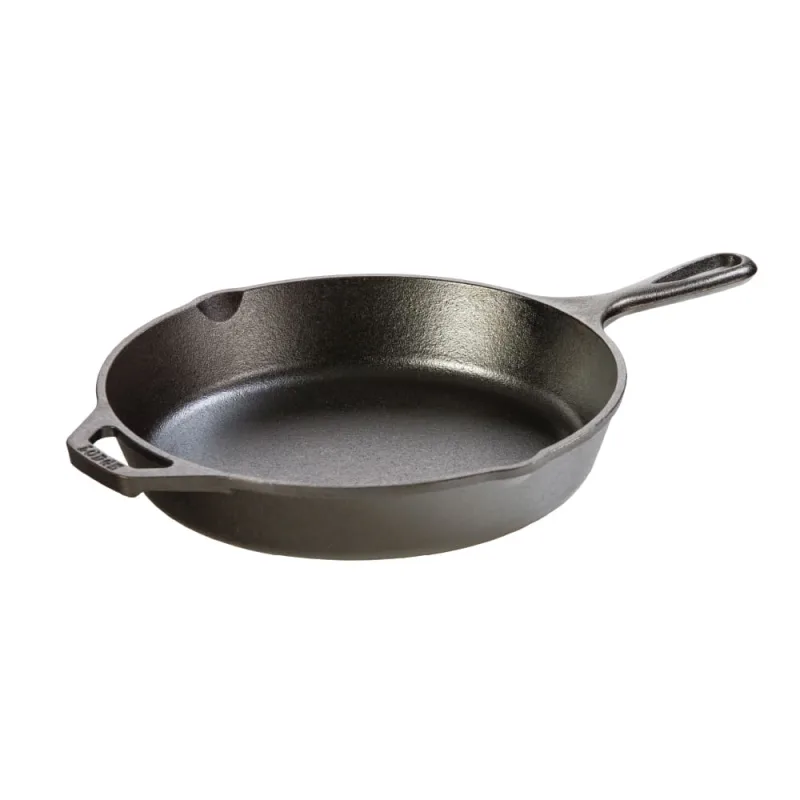
Lodge Classic Cast Iron Skillet 26cm L8SK3
The cast iron benchmark: pre-seasoned, made in the USA and cheap for something that lasts decades.
Check Price on Amazon Read the full reviewOur verdict: The best frying pan in 2026 is the Lodge Classic Cast Iron Skillet 26cm L8SK3. It tops our ranking with 9.2 out of 10.
Fewer picks than usual: no dearer model makes the top half.
The cast iron benchmark: pre-seasoned, made in the USA and cheap for something that lasts decades.
Check Price on Amazon Read the full reviewA light, plain aluminium pan with a titanium-reinforced non-stick coating and a heat indicator in the base.
Check Price on Amazon Read the full review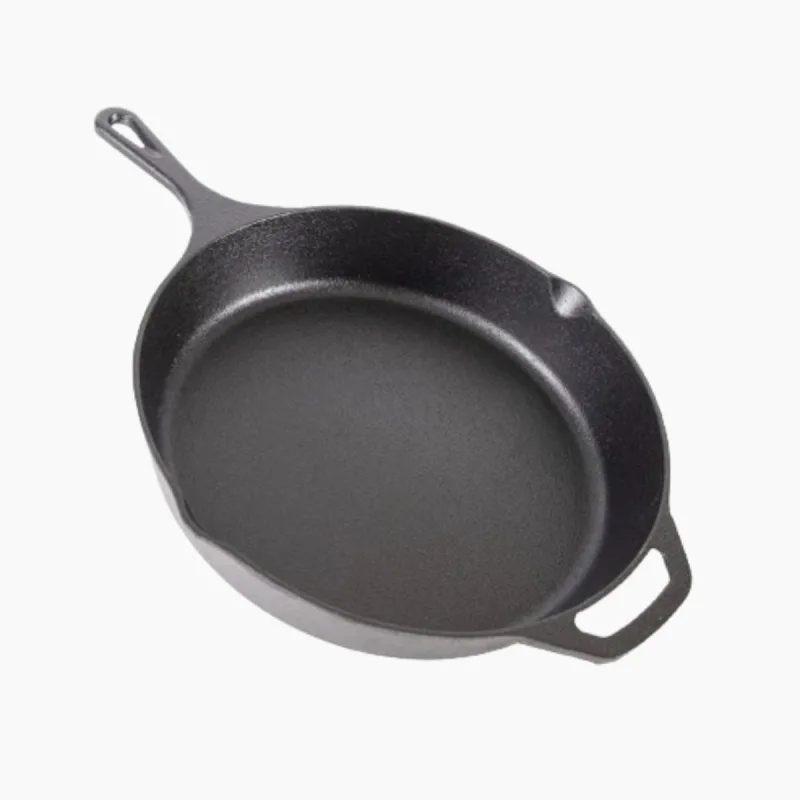
A large, pre-seasoned cast iron pan at a budget price.
Check Price on AmazonWe compared 16 frying pans sold in the UK, then ranked ten of them by how happy owners are. These ten cover PTFE non-stick, ceramic, plant-based non-stick, tri-ply stainless steel and cast iron in 26cm to 30cm sizes, from a budget pan to a premium one. Every product links to its full review below.
Lodge Classic Cast Iron Skillet 26cm L8SK3Best Choice
9.2 out of 10
Check Price
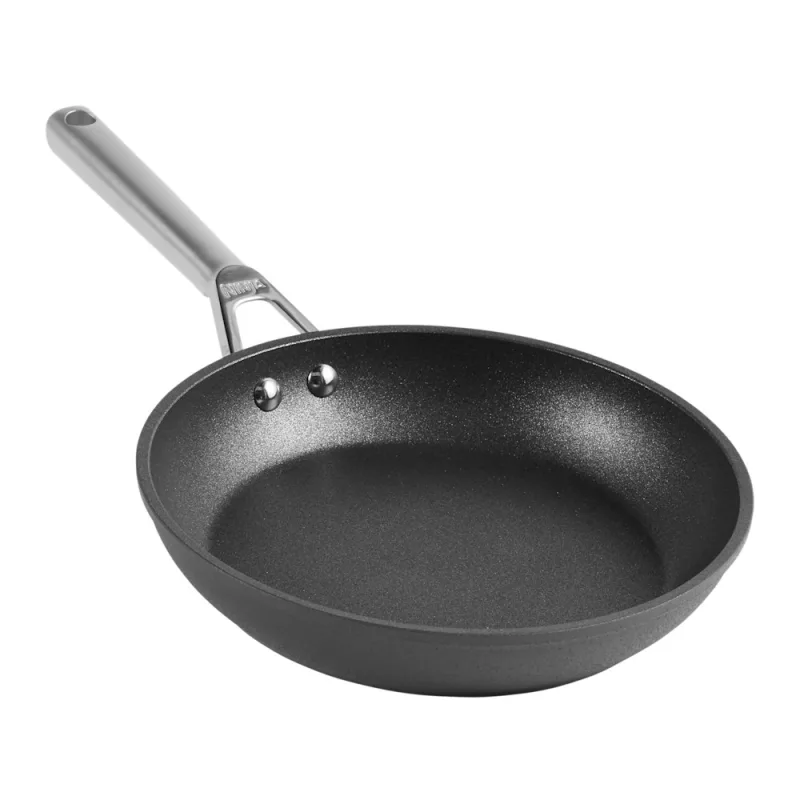 Ninja ZEROSTICK 28cm Frying Pan C30028UK
9.0 out of 10
Check Price
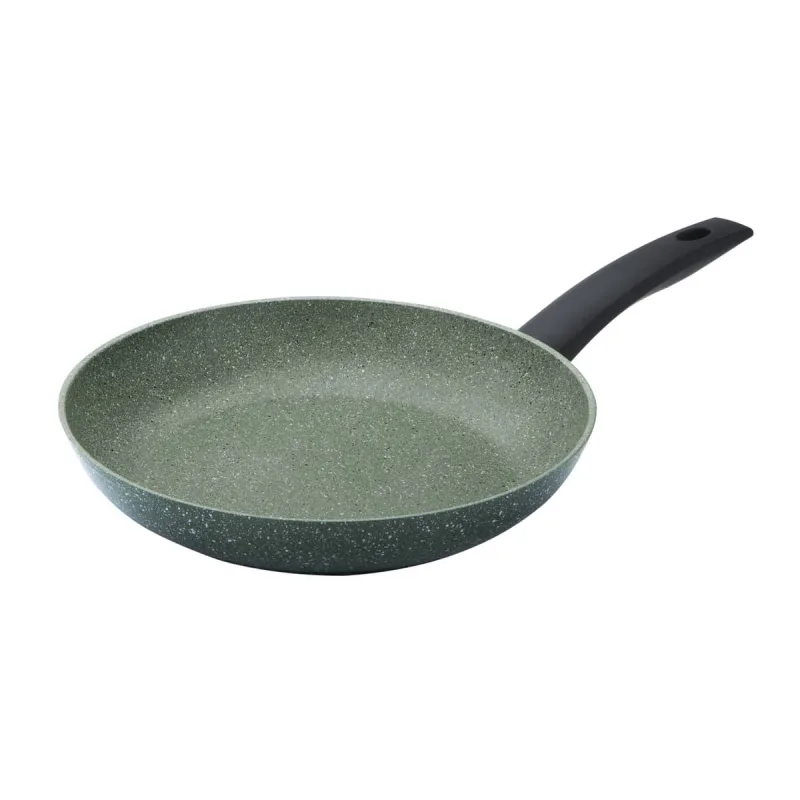 Prestige Eco Non-Stick Induction Frying Pan 28cm
8.4 out of 10
Check Price
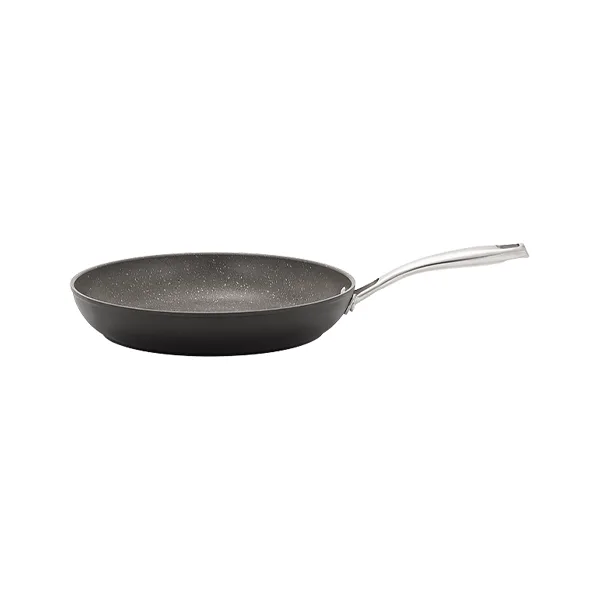 Stellar Rocktanium Frying Pan 28cm SP28
8.2 out of 10
Check Price
Nuovva Pre-Seasoned Cast Iron Frying Pans 30cmBest Budget
8.2 out of 10
Check Price
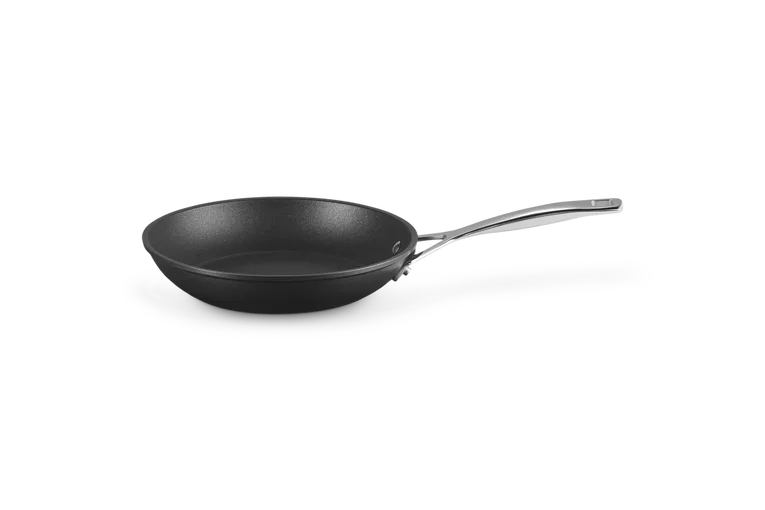 Le Creuset Toughened Non-Stick Shallow Frying Pan 28cm
7.9 out of 10
Check Price
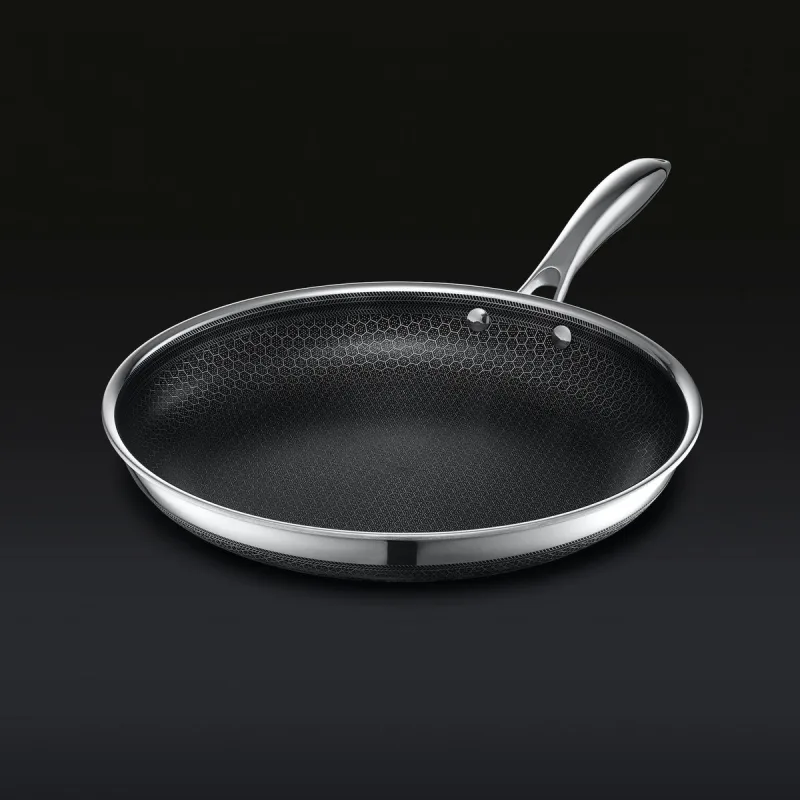 HexClad Hybrid Pan 30cm
7.6 out of 10
Check Price
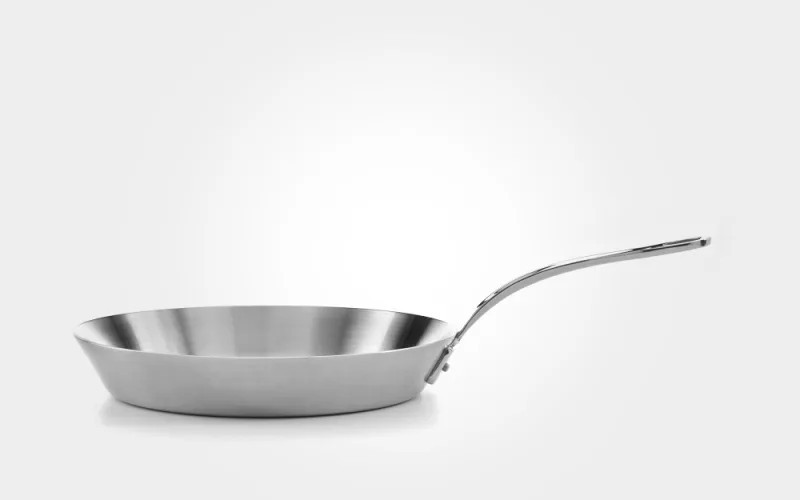 Samuel Groves Classic Tri-Ply Stainless Steel Frying Pan 28cm STP7127RH
7.2 out of 10
Check Price
The Lodge Classic Cast Iron Skillet 26cm L8SK3 (9.2) beats the Ninja ZEROSTICK 28cm Frying Pan C30028UK (9.0) because it leaves owners a little happier.
The cast iron benchmark: pre-seasoned, made in the USA and cheap for something that lasts decades. It sears hard and holds heat, but it is heavy and needs care.
Each bar shows its place in this guide, so a full bar is 1st of 10. How happy owners are counts for most of the score.
A hard-anodised aluminium pan that takes metal utensils, goes in the dishwasher and works on induction. It is the easy-living pick for a family that does not want to baby its cookware.
Each bar shows its place in this guide, so a full bar is 1st of 10. How happy owners are counts for most of the score.
A light, plain aluminium pan with a titanium-reinforced non-stick coating and a heat indicator in the base. It is one of the cheapest here, and the catch is that it does not work on induction.
Each bar shows its place in this guide, so a full bar is 1st of 10. How happy owners are counts for most of the score.
A budget aluminium pan with a plant-based non-stick coating, made in Italy from recycled aluminium. It works on induction and suits everyday eggs and fish, with a low oven limit.
Each bar shows its place in this guide, so a full bar is 1st of 10. How happy owners are counts for most of the score.
A light, UK-designed non-stick pan with a ten-year coating warranty. It is induction ready and dishwasher safe, at a mid-range price.
Each bar shows its place in this guide, so a full bar is 1st of 10. How happy owners are counts for most of the score.
A large, pre-seasoned cast iron pan at a budget price. It gives a family-size searing surface for much less than the better-known brands.
Each bar shows its place in this guide, so a full bar is 1st of 10. How happy owners are counts for most of the score.
A hard-anodised pan with a reinforced PTFE coating, built for daily frying and metal tools. It is the premium non-stick pick, with a price to match.
Each bar shows its place in this guide, so a full bar is 1st of 10. How happy owners are counts for most of the score.
A tri-ply pan with a laser-etched hexagon surface that sears like steel and releases like non-stick. It is the dearest pan here, with mixed reports on how well it keeps its release.
Each bar shows its place in this guide, so a full bar is 1st of 10. How happy owners are counts for most of the score.
An uncoated tri-ply stainless pan from a long-established Birmingham brand. It has no coating to wear out, so it suits cooks who want one pan for searing and oven finishing.
Each bar shows its place in this guide, so a full bar is 1st of 10. How happy owners are counts for most of the score.
A stainless tri-ply pan with a PFAS-free ceramic non-stick surface. It heats evenly and suits induction, but owners report the ceramic wearing within a year or two.
Each bar shows its place in this guide, so a full bar is 1st of 10. How happy owners are counts for most of the score.
For a mid-priced all-rounder, a hard-anodised pan such as the Ninja ZEROSTICK C30028UK suits most households, because it takes induction, the dishwasher and metal tools. For a budget price, the Tefal Day by Day does the job on gas, electric and ceramic hobs, but not induction. We compared 16 frying pans and ranked ten from owner ratings, so the order reflects what buyers report.
Modern PTFE pans are made without PFOA, and manufacturers say they are safe at normal frying temperatures. The usual advice is to avoid heating an empty pan and to stop using one that is badly flaking. PFAS is a wider chemical family that includes PTFE, so a PFAS-free label means the pan uses another coating, normally ceramic, such as the GreenPan here. Ceramic coatings tend to lose their release sooner than PTFE.
A pan needs a magnetic base and a flat one. Cast iron, stainless steel and most hard-anodised pans with a steel disc qualify. The Tefal Day by Day here does not, and Tefal states this on its page. Check the base diameter too: a small ring will heat only the central part of a 28cm pan.
Usually yes, but the limit is the lowest of the pan, handle and lid. Brand figures here run from 150°C for the Prestige and 175°C for the Tefal, to 260°C for Ninja and Le Creuset and 480°C for HexClad without its lid. Glass lids are rated lower than the pan, at 200°C for HexClad's. Cast iron has no coating or plastic to limit it.
Budget PTFE and ceramic pans commonly give one to three years of daily use, and premium or hard-anodised ones often last longer. Dishwashers, metal tools and high heat all shorten that. Replace a pan when food sticks even with oil, when the coating flakes, or when the base warps and spins on the hob. A ten-year guarantee such as Ninja's requires registering the pan, so check the terms before relying on it.
It depends on what you cook. Stainless steel sears meat, builds a pan sauce and survives metal tools and the oven, but it needs preheating and oil to stop eggs sticking. Non-stick is easier for eggs, omelettes and fish and cleans faster, but the coating is a consumable. In hard-water areas, stainless needs the occasional vinegar soak to remove limescale marks. Cast iron suits cooks who want searing and will tolerate the weight and seasoning.
Every score here comes from our ranking model; no editor sets the order. We haven't read the review sites for this guide yet, so for now it is led by owners. It ranks products by how happy owners are, holding back any product few owners have rated until more agree. How many rated it and how new it is only settle close calls, and value for money earns its own badge rather than a higher place. We compared 16 models for this guide before settling on these ten.
Brands can't pay to be included or to move up. We last checked these picks in November 2026.
How we rank, in fullThe cast iron benchmark: pre-seasoned, made in the USA and cheap for something that lasts decades. 9.2 out of 10.