
EcoFlow DELTA 2
A proven 1 kWh LiFePO4 workhorse with 1,800 W of output and a deep accessory range.
Check Price on Amazon Read the full reviewOur verdict: The best portable power station in 2026 is the EcoFlow DELTA 2. It tops our ranking with 9.3 out of 10.
Fewer picks than usual: no dearer model makes the top half.
A proven 1 kWh LiFePO4 workhorse with 1,800 W of output and a deep accessory range.
Check Price on Amazon Read the full review
A light 1 kWh LiFePO4 station with a handle and a simple app.
Check Price on Amazon Read the full review
A compact LiFePO4 station that charges fast and runs quietly.
Check Price on Amazon Read the full reviewWe compared 17 portable power stations sold in the US and ranked ten by owner ratings. They split into two compact units under 300 Wh, five mid-size stations of 768 to 1,070 Wh and three large units of 2,000 Wh and up. Every product links to its full review below.
EcoFlow DELTA 2Best Choice
9.3 out of 10
Check Price
 Anker SOLIX C1000 Gen 2 Portable Power Station (A1763)
9.2 out of 10
Check Price
Jackery Explorer 1000 V2Value for Money
9.2 out of 10
Check Price
EcoFlow RIVER 3Best Budget
9.2 out of 10
Check Price
 Anker SOLIX C800 Plus Portable Power Station
9.2 out of 10
Check Price
 Jackery Explorer 300 Plus
9.2 out of 10
Check Price
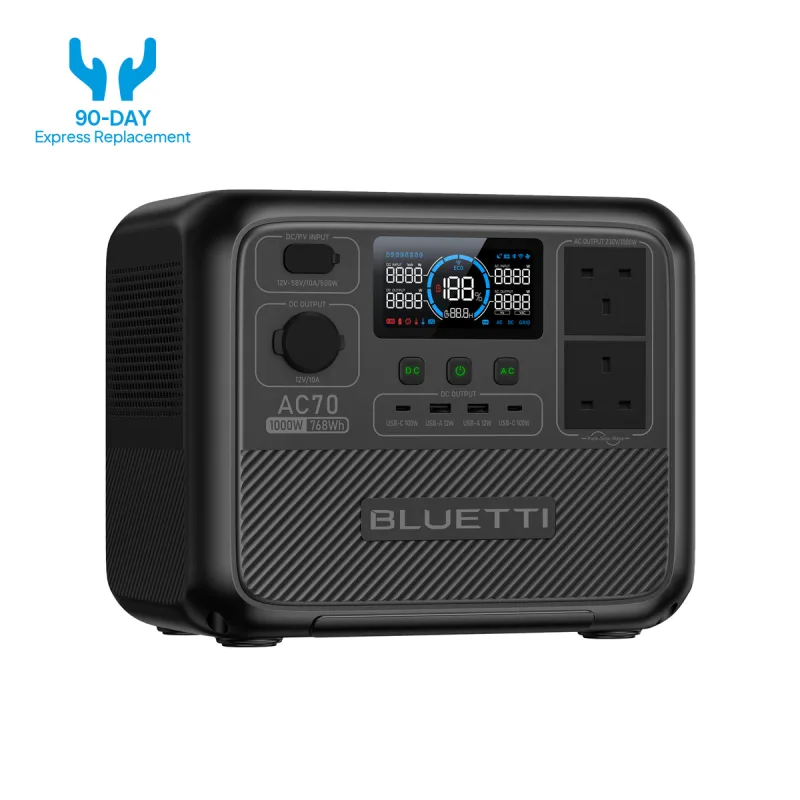 BLUETTI AC70
9.1 out of 10
Check Price
 EcoFlow DELTA 2 Max
9.1 out of 10
Check Price
 BLUETTI Elite 200 V2
9.0 out of 10
Check Price
 BLUETTI Elite 400
8.9 out of 10
Check Price
The EcoFlow DELTA 2 (9.3) beats the Anker SOLIX C1000 Gen 2 Portable Power Station (A1763) (9.2) because it leaves owners a little happier. No. 2 is the newer design, but not by enough to close the gap.
A proven 1 kWh LiFePO4 workhorse with 1,800 W of output and a deep accessory range. It is the all-rounder for outages and RV trips.
Each bar shows its place in this guide, so a full bar is 1st of 10. How happy owners are counts for most of the score.
A 1 kWh station with a 2,000 W inverter and very quick charging. Good for outage backup and a home-office desk.
Each bar shows its place in this guide, so a full bar is 1st of 10. How happy owners are counts for most of the score.
A light 1 kWh LiFePO4 station with a handle and a simple app. It is one of the lowest-cost ways into 1,000 Wh and 1,500 W.
Each bar shows its place in this guide, so a full bar is 1st of 10. How happy owners are counts for most of the score.
A compact LiFePO4 station that charges fast and runs quietly. A strong pick for desk backup, camping and travel.
Each bar shows its place in this guide, so a full bar is 1st of 10. How happy owners are counts for most of the score.
A mid-size LiFePO4 station with a 1,200 W inverter and a quick recharge. It covers a router, laptop and a small refrigerator through an outage.
Each bar shows its place in this guide, so a full bar is 1st of 10. How happy owners are counts for most of the score.
The LiFePO4 update of the Explorer 300. It suits buyers who want a small unit that should last many years of regular use.
Each bar shows its place in this guide, so a full bar is 1st of 10. How happy owners are counts for most of the score.
A mid-size LiFePO4 station with two AC outlets, USB-C ports and fast charging. It handles a router, laptop and a small refrigerator in an outage.
Each bar shows its place in this guide, so a full bar is 1st of 10. How happy owners are counts for most of the score.
A 2 kWh LiFePO4 station that grows to 6 kWh with extra batteries. It is built for buyers who expect to add capacity later.
Each bar shows its place in this guide, so a full bar is 1st of 10. How happy owners are counts for most of the score.
A 2 kWh LiFePO4 station that covers a refrigerator, router and lights through an outage. It has some of the lowest cost per watt-hour of the large units here.
Each bar shows its place in this guide, so a full bar is 1st of 10. How happy owners are counts for most of the score.
The biggest battery here at 3.8 kWh, on wheels. It suits long outages and RVs where weight matters less than runtime.
Each bar shows its place in this guide, so a full bar is 1st of 10. How happy owners are counts for most of the score.
Under 500 Wh covers phones, laptops, a router and a CPAP for a night or a weekend. From 700 to 1,100 Wh runs a router, lights and a refrigerator for several hours, and suits short outages or car camping. For home backup through a full day, look at 2,000 Wh and up. Add up the watts of what you plan to run and multiply by hours, then allow about 15 percent extra for inverter losses.
Yes, if the output covers the start-up surge. A modern refrigerator draws about 100 to 200 W when running and uses roughly 1 to 1.5 kWh a day, with a brief surge of several hundred watts at start. A 1,000 Wh station keeps one going for about 6 to 8 hours, and a 2,000 Wh or larger unit for most of a day. Open the door as little as possible, and use a station with a UPS or pass-through mode if you want it to switch over automatically.
A power station is a battery with an inverter. It is silent, safe to use indoors and needs no fuel, but runs out and must be recharged from the wall, car or solar. A gasoline generator gives hours of power from a tank, but it is loud, makes carbon monoxide, and must be run outside. For small loads and short outages a power station is simpler; for a whole house over days, a generator or a home battery system is needed.
For most buyers, yes. LiFePO4 cells are rated for roughly 3,000 to 6,000 cycles to 80 percent, against about 500 to 800 for NMC lithium-ion, and they are more stable at high temperatures. They weigh a little more for the same capacity. All ten stations here use LiFePO4, so the choice comes down to capacity, output and weight.
Fast-charging units such as the EcoFlow Delta 2 and Anker C1000 Gen 2 reach a full charge from a 120V outlet in about 50 to 80 minutes. Smaller or older units take two to five hours. Solar time is roughly the capacity in watt-hours divided by panel watts, with about 25 percent extra for losses, so a 1,000 Wh station on 400 W of panels needs around 3 to 4 hours of strong sun. Check each station's maximum solar input, and note that most batteries slow or stop charging below about 32°F.
A CPAP uses roughly 30 to 60 W, so a 300 Wh unit covers one night, a little less if the heated humidifier is on. A space heater on a 15 amp, 120V circuit draws up to 1,500 W, which flattens a 1,000 Wh station in under an hour. Heating elements, such as those in space heaters, hair dryers and toasters, drain batteries quickly, so only the largest stations are practical for them. For comparison, charging 1 kWh from the wall costs about 17 cents at the average US electricity price.
Every score here comes from our ranking model; no editor sets the order. We haven't read the review sites for this guide yet, so for now it is led by owners. It ranks products by how happy owners are, holding back any product few owners have rated until more agree. How many rated it and how new it is only settle close calls, and value for money earns its own badge rather than a higher place. We compared 17 models for this guide before settling on these ten.
Brands can't pay to be included or to move up. We last checked these picks in November 2026.
How we rank, in fullA proven 1 kWh LiFePO4 workhorse with 1,800 W of output and a deep accessory range. 9.3 out of 10.