
Jackery Explorer 1000 v2
A quiet 1,070Wh LiFePO4 unit with a one-hour fast charge.
Check Price on Amazon Read the full reviewOur verdict: The best portable power station in 2026 is the Jackery Explorer 1000 v2. It tops our ranking with 9.0 out of 10.
Fewer picks than usual: no other model in the top half is better value and no dearer model makes the top half.
A quiet 1,070Wh LiFePO4 unit with a one-hour fast charge.
Check Price on Amazon Read the full review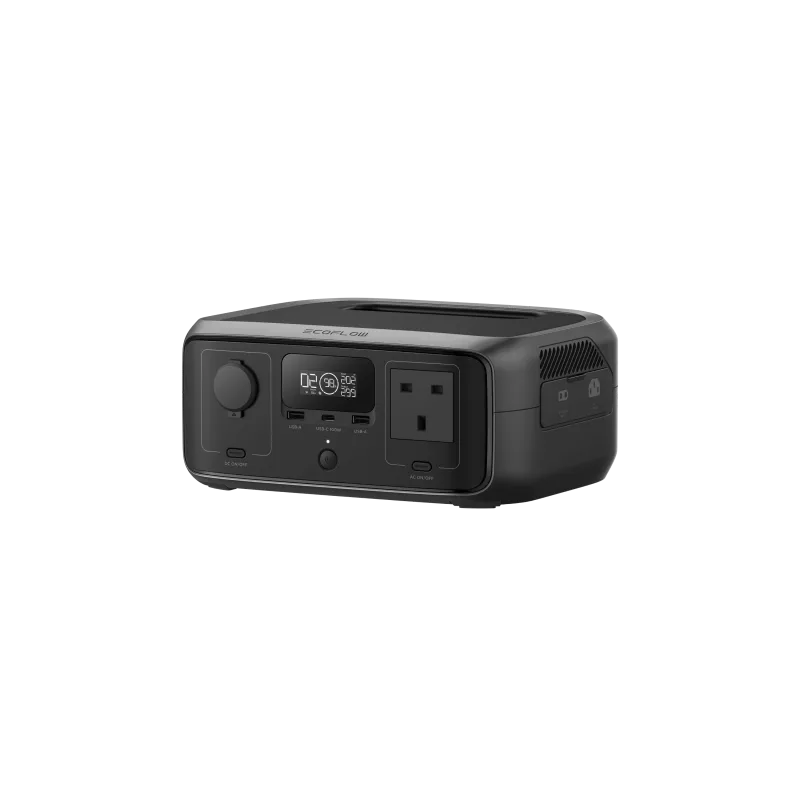
A small 245Wh LiFePO4 unit with a fast UPS switchover.
Check Price on Amazon Read the full reviewWe compared 15 portable power stations sold in the UK and ranked ten by owner satisfaction. They run from a compact 245Wh unit for routers and weekends away, through 1kWh camping and van models, to 2kWh to 3kWh machines for power cuts and tools. Every product links to its full review below.
Jackery Explorer 1000 v2Best Choice
9.0 out of 10
Check Price
EcoFlow RIVER 3 UPSBest Budget
8.9 out of 10
Check Price
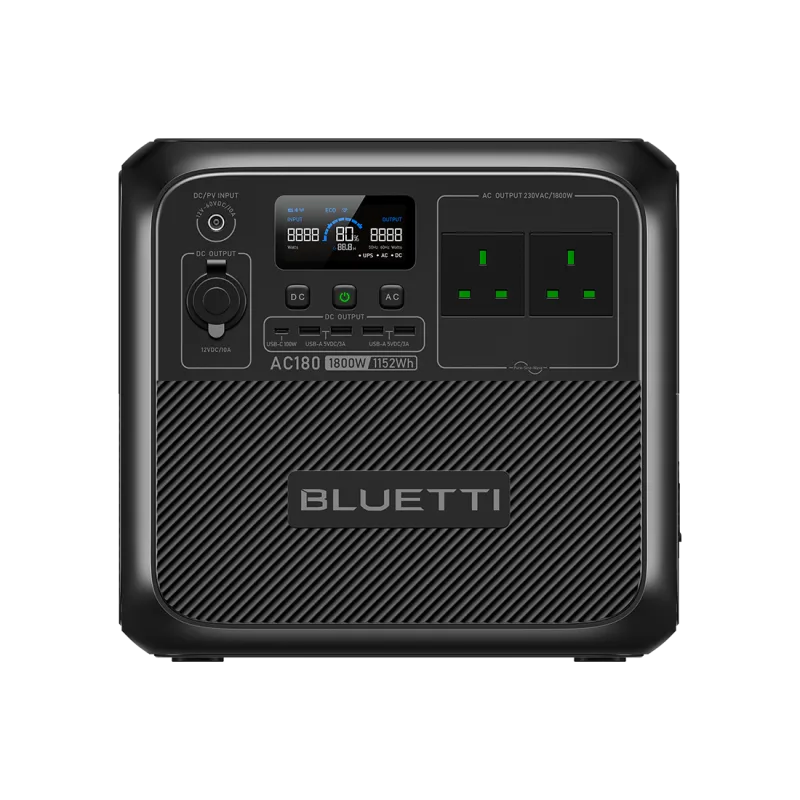 Bluetti AC180
8.9 out of 10
Check Price
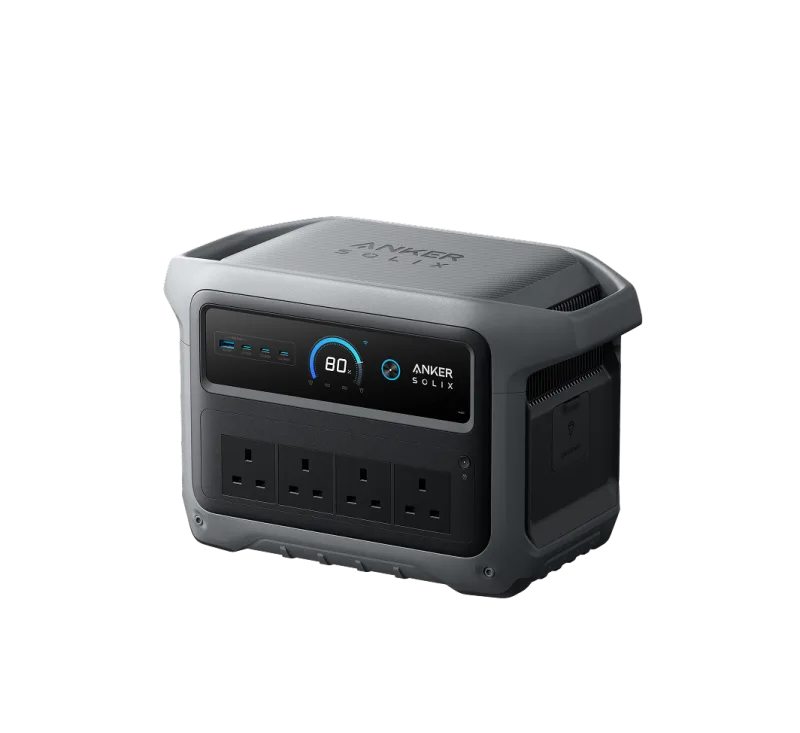 Anker SOLIX C1000 Gen 2
8.9 out of 10
Check Price
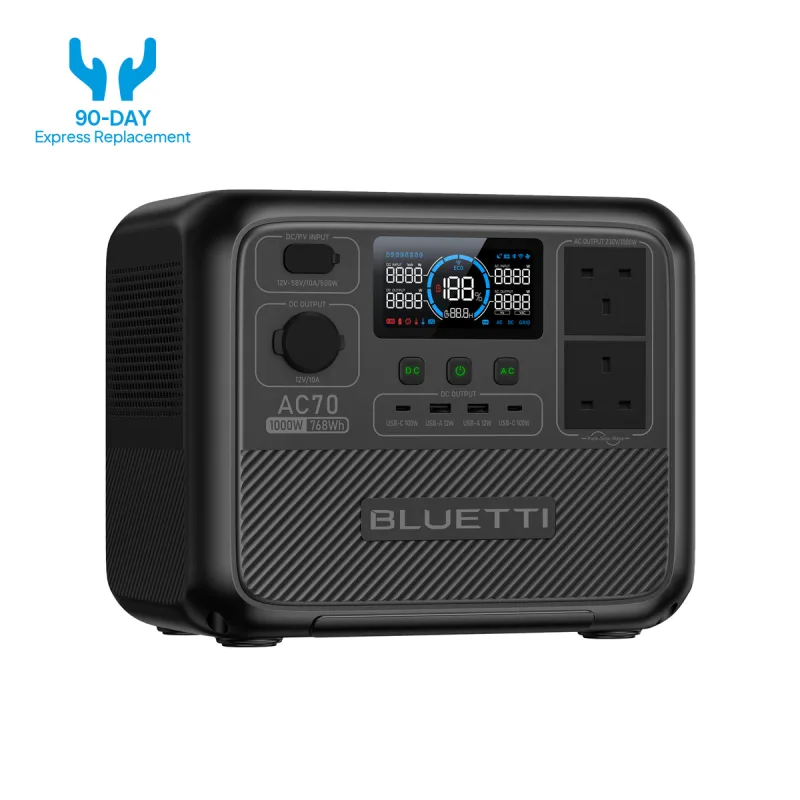 Bluetti AC70
8.9 out of 10
Check Price
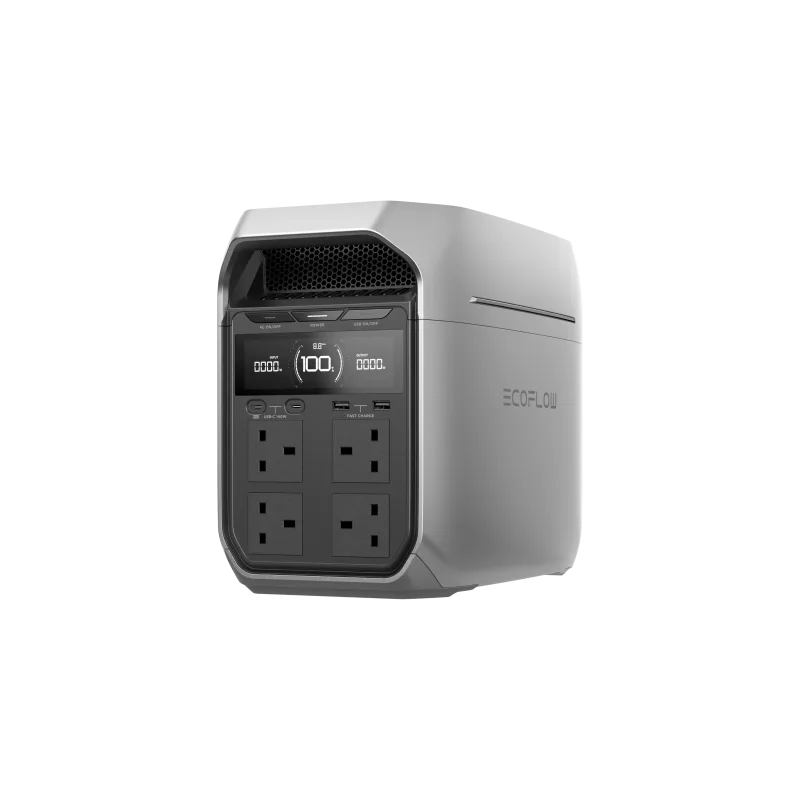 EcoFlow DELTA 3 Plus
8.8 out of 10
Check Price
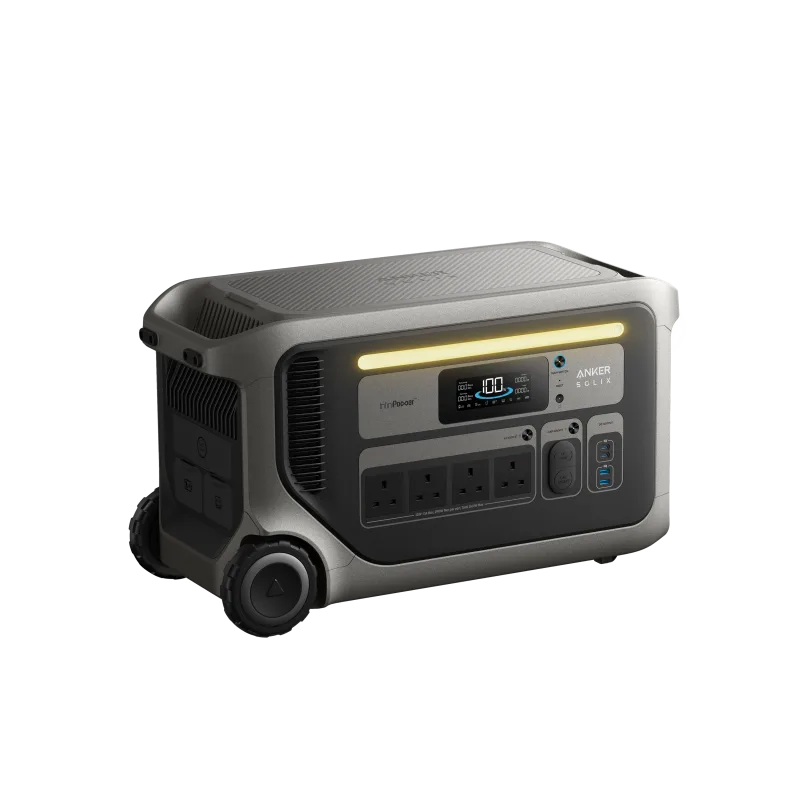 Anker SOLIX F3000
8.8 out of 10
Check Price
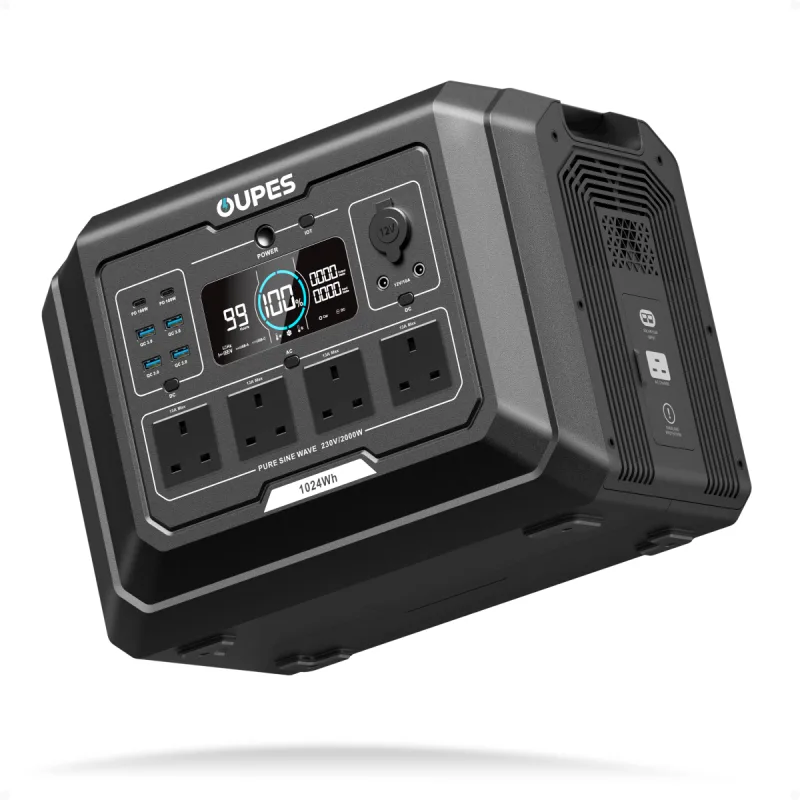 OUPES Mega 1
8.6 out of 10
Check Price
 DJI Power 1000 Mini
8.6 out of 10
Check Price
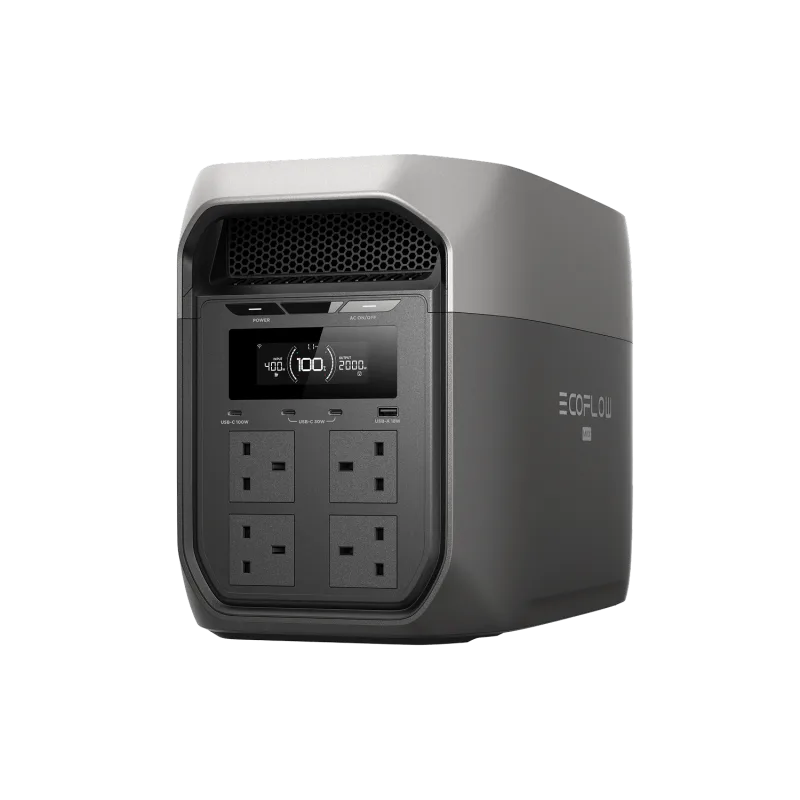 EcoFlow DELTA 3 Max Plus
8.6 out of 10
Check Price
The Jackery Explorer 1000 v2 (9.0) beats the EcoFlow RIVER 3 UPS (8.9) because it leaves owners a little happier.
A quiet 1,070Wh LiFePO4 unit with a one-hour fast charge. Owners like how compact it is and how little noise it makes at normal loads.
Each bar shows its place in this guide, so a full bar is 1st of 10. How happy owners are counts for most of the score.
A small 245Wh LiFePO4 unit with a fast UPS switchover. It is the cheapest here and suits a router, laptops and lights during a power cut or a weekend away.
Each bar shows its place in this guide, so a full bar is 1st of 10. How happy owners are counts for most of the score.
A well-established 1.15kWh LiFePO4 unit with 1,800W output and quick charging. Owners use it for camping, vans and as a power-cut backup, often paired with Bluetti's own solar panels.
Each bar shows its place in this guide, so a full bar is 1st of 10. How happy owners are counts for most of the score.
A 1kWh LiFePO4 unit that recharges from the wall in under an hour. It suits campers and vans that want fast top-ups and a UPS-style switchover for a router or PC.
Each bar shows its place in this guide, so a full bar is 1st of 10. How happy owners are counts for most of the score.
A mid-sized 768Wh unit at a budget-to-mid price. It has 1,000W output with a power-lifting mode to 2,000W, and suits weekend camping as a first power station.
Each bar shows its place in this guide, so a full bar is 1st of 10. How happy owners are counts for most of the score.
A 1kWh LiFePO4 all-rounder that combines quick charging, high solar input and a long warranty, and it can grow with extra batteries.
Each bar shows its place in this guide, so a full bar is 1st of 10. How happy owners are counts for most of the score.
The big-capacity pick. 3,072Wh and 3,600W take a kettle, a heater or a mitre saw, and the EasyTow design with wheels makes it easier to shift than most units this size.
Each bar shows its place in this guide, so a full bar is 1st of 10. How happy owners are counts for most of the score.
A 1kWh LiFePO4 unit with 2,000W output and a high surge rating, which suits power tools and bigger loads than most 1kWh rivals can start. Support and app polish trail the bigger brands.
Each bar shows its place in this guide, so a full bar is 1st of 10. How happy owners are counts for most of the score.
A compact 1,008Wh LiFePO4 unit that is smaller than most others at this capacity. It suits campers and van owners who care about size and weight.
Each bar shows its place in this guide, so a full bar is 1st of 10. How happy owners are counts for most of the score.
A 2kWh machine with 3,000W output that handles a kettle or a heater and expands to 10kWh. It is aimed at people planning a bigger power-cut setup, without a wired-in system.
Each bar shows its place in this guide, so a full bar is 1st of 10. How happy owners are counts for most of the score.
Add up the watts of the devices you will run together and compare that to the continuous output, then multiply watts by hours and add 15 to 20 percent for inverter losses to get the capacity in Wh. As a rough guide: 250Wh to 500Wh for a router, phones and laptops; 500Wh to 1,100Wh for a weekend camping trip or a campervan with a fridge; 2,000Wh or more for tools or longer power cuts. Anything that heats, such as a kettle, heater or hob, needs 2,000W or more of output.
A weekend for two with phones, lights and a laptop uses around 200Wh to 400Wh, so a 300Wh to 700Wh unit is enough. A 12V compressor fridge draws 30W to 60W only while the compressor runs, so it typically uses 300Wh to 700Wh a day, and a 1kWh unit covers around a day of fridge plus extras. Add a margin, because cold nights and inverter losses reduce what you get.
A fridge is easy: a 12V camping fridge draws 30W to 60W and a mains fridge 50W to 150W while the compressor runs. UK kettles and fan heaters draw 2,000W to 3,000W. The 2,000W units here (Anker SOLIX C1000 Gen 2 and OUPES Mega 1) run a 2kW kettle but not a 3kW one. The 3,000W EcoFlow DELTA 3 Max Plus just manages a 3kW kettle, and only the 3,600W Anker SOLIX F3000 has real headroom. Features such as X-Boost let some units run heating appliances at reduced power, which means a slower boil.
For most buyers, yes. LiFePO4 batteries usually last 3,000 to 4,000 cycles before dropping to 70 to 80 percent capacity, against 500 to 800 for older lithium types, and they tolerate heat better. They are a little heavier for the same capacity. All ten here use LiFePO4. Store them part-charged, somewhere dry and ventilated, and avoid charging below freezing, as most units limit cold charging.
Yes, but expect much less than the panel rating. A 200W panel can give roughly 600Wh to 900Wh on a bright summer day, and a fraction of that in a UK winter or under cloud. Check the unit's maximum solar input in watts and its voltage range before buying panels, and treat solar as a top-up alongside mains or car charging.
Yes. A router draws around 10W to 15W, so even a 245Wh unit keeps it on for many hours, and a 1kWh unit lasts for days with it. Look for a switchover under 10ms to 20ms and pass-through charging so the unit can stay plugged in, and keep in mind it is not a whole-house or wired-in system. For medical equipment, check with the device maker first; these units are not certified medical backup.
Every score here comes from our ranking model; no editor sets the order. We haven't read the review sites for this guide yet, so for now it is led by owners. It ranks products by how happy owners are, holding back any product few owners have rated until more agree. How many rated it and how new it is only settle close calls, and value for money earns its own badge rather than a higher place. We compared 15 models for this guide before settling on these ten.
Brands can't pay to be included or to move up. We last checked these picks in November 2026.
How we rank, in fullA quiet 1,070Wh LiFePO4 unit with a one-hour fast charge. 9.0 out of 10.